
How is tempered glass made
Tempered glass is actually a type of prestressed glass. To improve the strength of glass, chemical or physical methods are usually used to create compressive stress on the surface of the glass. When the glass is subjected to external forces, the surface stress is first counteracted, thereby improving its load-bearing capacity and enhancing its tensile strength. The primary advantages of tempered glass are twofold. Firstly, its strength has improved several times compared to ordinary glass, with bending strength being 3-5 times that of ordinary glass and impact strength being 5-10 times that of ordinary glass. Along with the improvement in strength, safety has also been enhanced. The use of Anman is the second primary advantage of tempered glass, as it increases its load-bearing capacity and improves its fragility. Even if the tempered glass is damaged, it remains in small pieces without sharp angles, greatly reducing the harm to the human body. The rapid cooling and heating resistance of tempered glass is 2-3 times better than that of ordinary glass, and it can generally accept temperature differences of more than 150LC, which has a significant effect on avoiding thermal cracking.
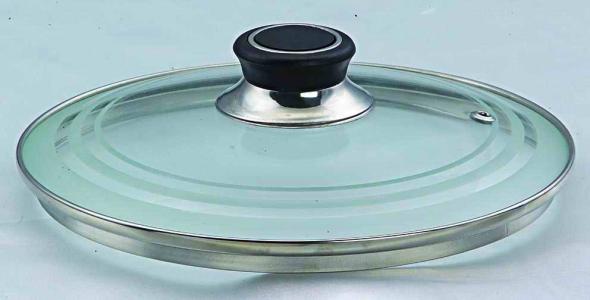
Tempered glass is a product that is processed by cutting, grinding, cleaning, and other pre-treatment processes on ordinary flat glass before being sent to the tempering production line for tempering treatment. The tempered glass production line is mainly composed of a heating furnace and a cooling air grille, and there should also be a pressing molding station when producing curved tempered glass. The glass first enters the heating electric furnace and is heated to around 600LC, which has reached the softening point of the glass. Then, the heated glass is quickly sent to the cooling station, and the strong wind of the blower is evenly blown to both sides of the glass through the air grille, causing the glass to cool rapidly. The internal shrinkage of the glass is that the outer surface cools first, and the inner surface cools later. As the inner surface gradually cools down, the internal accommodation is limited by the outer surface layer that was previously cooled, thus forming compressive stress on the surface and tensile stress on the inner surface.
Article source: Tempered glass coverwww.yinghuade.com
-
12-03
Tempered Glass Cover: How to Clean Glass Pot Cover
1. Flour has a strong adsorption effect and can absorb and remove oil stains from the pot lid. The specific steps are to evenly apply flour to the surface of the pot lid, and the amount of flour used
-
12-03
Glass cap manufacturer: Reasons and solutions for foaming of glass bottles after high-temperature spray painting
The primary reason for the foaming of glass bottles during high-temperature spray painting is:1. The coating comes into contact with water or is exposed to high temperatures;2. The solvent evaporates
-
12-02
Silicone pot cover: What is the difference between acrylic panel and glass panel
Distinguishing by chemical properties:Acrylic panels are classified as organic glass panels, which are synthetic plastic panels; Glass panels are classified as inorganic panels.From the perspective of
-
12-01
Market demand for tempered glass covers
The market demand for glass covers will increaseThe material conditions of modern society have been greatly satisfied, and the production of more and more materials and products has reached market sat
Copyright © 2026 Jiangmen Yinghua Technology Industrial Co., Ltd All rights reserved