
Why does tempered glass cover explode
The reason for the self explosion of tempered glass is that during the glass production process, some nickel containing impurities are mixed in the melted materials such as raw materials or refractory materials. These impurities interact with each other during the glass melting process to form nickel sulfide crystals. Nickel sulfide crystals exhibit an alpha phase at temperatures exceeding 380 ℃ and a beta phase at room temperature. When the nickel sulfide crystal changes from the alpha phase to the beta phase, the volume of the crystal will change by 2-4%, and the average diameter of the nickel sulfide crystal that causes self explosion of tempered glass is about 0.2mm.
During the formation of raw glass, a slow annealing process is required, and nickel sulfide crystals will not affect the strength of the glass at all. But when tempering glass, the situation is very different. Because tempered glass uses quenching process. Under the action of cooling air, the cooling rate of glass is very fast. When the glass is cooled to room temperature and the structure is completely fixed, the α - phase nickel sulfide crystals do not have time to transform into the low-temperature β phase, and still exist in the high-temperature α phase state.
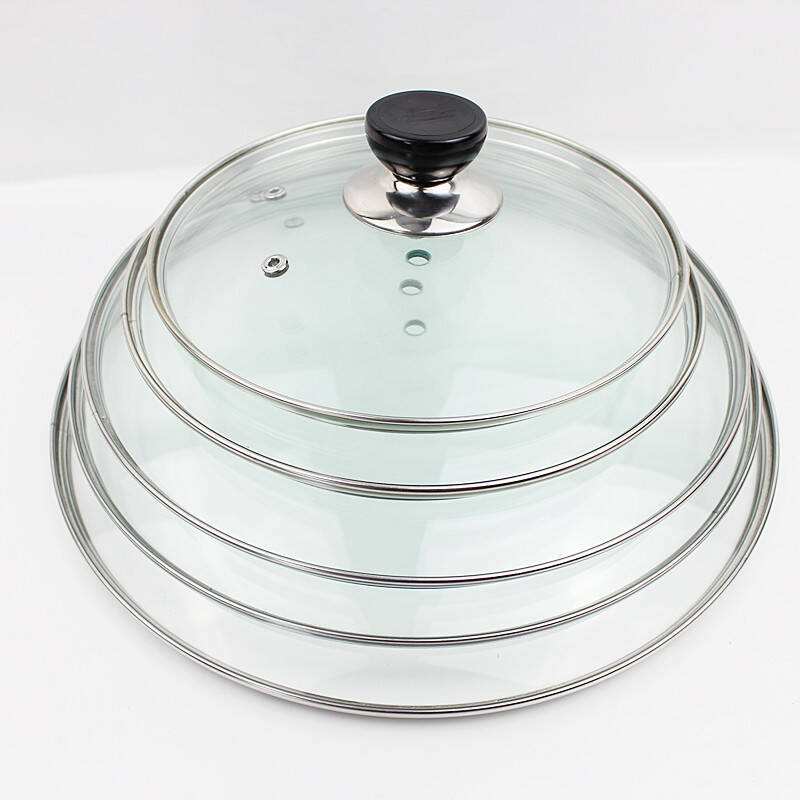
If nickel sulfide crystals appear in the tensile stress zone of tempered glass, any change in crystal structure will definitely cause self explosion. Due to the unpredictable time of crystal transformation, the self explosion of tempered glass at room temperature is also completely uncertain.
Explosive processing reduces the probability of self explosion
The method to solve the self explosion of tempered glass is to homogenize the tempered glass: that is, to reheat the tempered glass to 280-300 ℃, and then keep it warm for 2-4 hours, so that the tempered glass that has the condition to self explode can burst during this process. The homogenization of tempered glass is also known as the detonation treatment of tempered glass or the hot-dip treatment of tempered glass.
According to statistics, after strict homogenization treatment, the probability of self explosion of tempered glass will be greatly reduced, and the probability of one self explosion occurring per 10000 square meters of glass in one year is only less than 1%. At this point, tempered glass can be called real safety glass.
Article source: Tempered glass coverwww.yinghuade.com
-
12-03
Tempered Glass Cover: How to Clean Glass Pot Cover
1. Flour has a strong adsorption effect and can absorb and remove oil stains from the pot lid. The specific steps are to evenly apply flour to the surface of the pot lid, and the amount of flour used
-
12-03
Glass cap manufacturer: Reasons and solutions for foaming of glass bottles after high-temperature spray painting
The primary reason for the foaming of glass bottles during high-temperature spray painting is:1. The coating comes into contact with water or is exposed to high temperatures;2. The solvent evaporates
-
12-02
Silicone pot cover: What is the difference between acrylic panel and glass panel
Distinguishing by chemical properties:Acrylic panels are classified as organic glass panels, which are synthetic plastic panels; Glass panels are classified as inorganic panels.From the perspective of
-
12-01
Market demand for tempered glass covers
The market demand for glass covers will increaseThe material conditions of modern society have been greatly satisfied, and the production of more and more materials and products has reached market sat
Copyright © 2026 Jiangmen Yinghua Technology Industrial Co., Ltd All rights reserved