
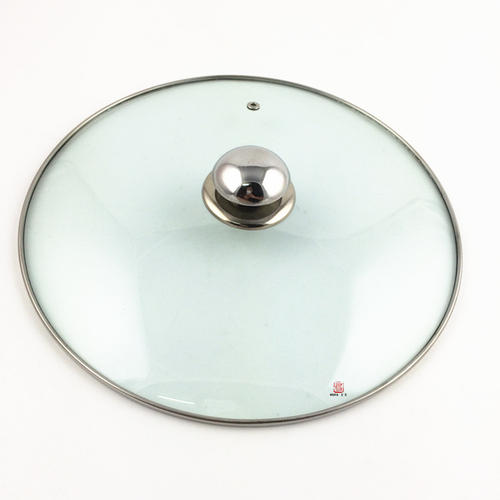
What is the reason for the rupture of tempered glass cover
Summer has arrived, and people walking on the streets are like ants on a hot pot. Recently, there have been frequent reports in the news about incidents of tempered glass cracking on the glass exterior walls of high-rise office buildings. Is it really because of the hot weather that the glass bursts? Below, we will take you to understand the reasons and measures for self explosion of tempered glass.
In fact, since the birth of tempered glass, it has been accompanied by the problem of self explosion. Tempered glass self explosion can be described as the phenomenon of automatic breakage of tempered glass without external direct action. Tempered glass can self destruct during processes such as processing, storage, transportation, installation, and use.
Firstly, let's take a look at whether the explosion point of the glass (the cracks in tempered glass are radial and have starting points) is in the center of the glass, such as at the edge of the glass. This is usually due to the glass not being chamfered or the edge of the glass being damaged, resulting in stress concentration and the gradual development of cracks; If the detonation point is located in the middle of the glass, check if there are two small polygonal pieces that resemble two butterfly wings (butterfly spots) at the detonation point. If there are visible black particles (nickel sulfide nodules) on the common edge of the two small polygonal pieces (the trunk of the butterfly), it can be determined that it is a self explosion; Otherwise, it should have been damaged by external forces. The typical characteristic of glass self explosion is butterfly spots. The glass fragments are distributed radially, with two glass blocks resembling butterfly wings at the center of the radiation, commonly known as "butterfly spots".
Preventive measure 1: Place a PVB center film between the glasses and process it under high temperature and high pressure. The PVB film has excellent resistance, and when the laminated glass breaks under external force, it can absorb a lot of impact and quickly decay, making it difficult for the laminated glass to penetrate and maintain good integrity. This enables buildings that use laminated glass to remain within the door and window structure even if the glass breaks during blasting, wind disasters, earthquakes, and other situations, protecting personnel inside and outside the building from the hazards of flying glass fragments. Wind, rain, and other foreign objects are also difficult to damage the interior. The shortcomings are: 1 The increase in glass thickness increases the load-bearing capacity and load capacity of the building; 2. It is not conducive to escape and rescue when a fire occurs.
Preventive measure 2: Stick high-performance polyester film on the glass. Polyester film, commonly known as explosion-proof film, can stick to glass fragments to prevent splashing when glass breaks due to various reasons, and protect personnel inside and outside the building from the harm of splashing glass fragments. Wind, rain, and other foreign objects are also difficult to cause damage indoors. Explosion proof film can be connected to the frame edge system together with adhesive to form a glass film maintenance system to prevent falling. Advantages: easy processing, no change to glass standards and layout; Shortcoming: Increased construction cost.
Preventive measure three: Install enclosure design and set up guardrails in densely populated areas to avoid losses caused by glass breakage.
Preventive measure four: Choose ultra white tempered glass with good thermal stability, high strength, low self explosion rate (approaching 0), high transparency, high technical content, and wide application scale.
Summarize these tips for preventing tempered glass cracking. We don't need to feel a sense of crisis just now. In fact, as long as you don't hit the four corners of tempered glass, you may not be able to break it with a hammer that doesn't have much force. The key is that when purchasing glass, we must choose a manufacturer with good reputation and qualified quality, so that we can use it with peace of mind.
Article source: Tempered glass coverwww.yinghuade.com
-
12-03
Tempered Glass Cover: How to Clean Glass Pot Cover
1. Flour has a strong adsorption effect and can absorb and remove oil stains from the pot lid. The specific steps are to evenly apply flour to the surface of the pot lid, and the amount of flour used
-
12-03
Glass cap manufacturer: Reasons and solutions for foaming of glass bottles after high-temperature spray painting
The primary reason for the foaming of glass bottles during high-temperature spray painting is:1. The coating comes into contact with water or is exposed to high temperatures;2. The solvent evaporates
-
12-02
Silicone pot cover: What is the difference between acrylic panel and glass panel
Distinguishing by chemical properties:Acrylic panels are classified as organic glass panels, which are synthetic plastic panels; Glass panels are classified as inorganic panels.From the perspective of
-
12-01
Market demand for tempered glass covers
The market demand for glass covers will increaseThe material conditions of modern society have been greatly satisfied, and the production of more and more materials and products has reached market sat
Copyright © 2026 Jiangmen Yinghua Technology Industrial Co., Ltd All rights reserved