
The difference between tempered glass and ordinary glass
Glass is a very old building material that has been present since ancient Egypt. With the common development of human society, the glass industry has invented various uniquely functional glasses, gradually increasing the types of glass, such as bulletproof glass, photoelectric glass, vacuum glass, etc., all of which play irreplaceable roles in their respective fields. Today, the editor will introduce the differences between ordinary glass and tempered glass.
Many people know that there are ordinary glass and tempered glass, but the differences between the two are not very clear. Let's take a look below.
Because after tempered glass is broken, the fragments will break into uniform small particles without the sharp corners of the glass blade, it is called safety glass and widely used in automobiles and interior decoration.
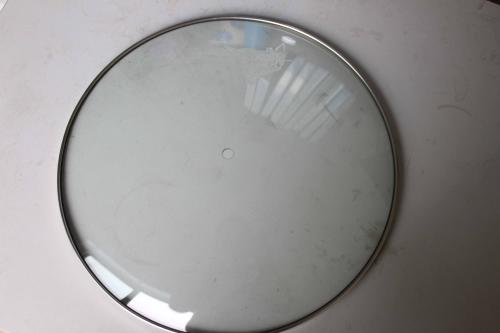
In homes, the sharp blade shaped corners of broken glass can easily cut children or impactors, causing damage to their bodies. The primary difference between tempered glass and regular glass is whether the glass breaks into small particles or a knife like shape. But in engineering inspections, it is undoubtedly unrealistic to always choose such destructive inspections.
So, how can I know if what I bought is tempered glass?
This still needs to be analyzed from the principle of tempered glass production. Tempered glass is obtained by cutting general annealed glass into the required size, heating it to the nearest softening point, and then rapidly and uniformly cooling it. After tempering treatment, the surface of the glass forms uniform compressive stress, while the interior forms tensile stress, greatly improving the functionality of the glass. Its tensile strength is more than three times that of the latter, and its impact resistance is more than five times that of the latter.
It is precisely this characteristic that makes stress characteristics an important indicator for distinguishing between genuine and fake tempered glass. That is, tempered glass can see colored stripes at the edges of the glass through polarizing film, and black and white spots can be observed on the surface layer of the glass. Polarized light plates can be found in camera lenses or glasses. When conducting investigations, pay attention to adjusting the light source, which makes the investigation easier.
Article source: Tempered glass coverhttp://www.yinghuade.com
-
12-03
Tempered Glass Cover: How to Clean Glass Pot Cover
1. Flour has a strong adsorption effect and can absorb and remove oil stains from the pot lid. The specific steps are to evenly apply flour to the surface of the pot lid, and the amount of flour used
-
12-03
Glass cap manufacturer: Reasons and solutions for foaming of glass bottles after high-temperature spray painting
The primary reason for the foaming of glass bottles during high-temperature spray painting is:1. The coating comes into contact with water or is exposed to high temperatures;2. The solvent evaporates
-
12-02
Silicone pot cover: What is the difference between acrylic panel and glass panel
Distinguishing by chemical properties:Acrylic panels are classified as organic glass panels, which are synthetic plastic panels; Glass panels are classified as inorganic panels.From the perspective of
-
12-01
Market demand for tempered glass covers
The market demand for glass covers will increaseThe material conditions of modern society have been greatly satisfied, and the production of more and more materials and products has reached market sat
Copyright © 2026 Jiangmen Yinghua Technology Industrial Co., Ltd All rights reserved