
Can the welding scar left by the production of tempered glass cover be removed
Tempered glass is obtained by cutting ordinary annealed glass into the required size, heating it to around 700 degrees near the softening point, and then rapidly and uniformly cooling it. After tempering treatment, uniform compressive stress is formed on the surface of the glass, while tensile stress is formed inside, which improves the bending and impact strength of the glass. The strength of tempered glass is more than four times that of ordinary annealed glass.
Tempered glass is classified as safety glass. Tempered glass is actually a type of prestressed glass. To improve the strength of glass, chemical or physical methods are generally used to create compressive stress on the surface of the glass. When the glass is subjected to external forces, the surface stress is first counteracted, and then the load-bearing capacity is advanced to enhance the glass's own resistance to wind pressure, heat and cold, impact, etc.
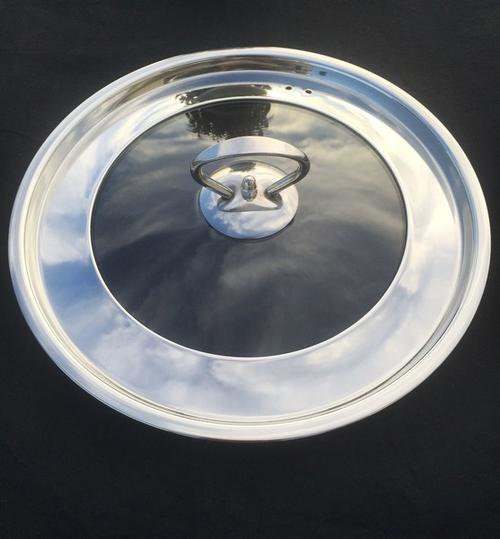
During the production process, welding slag falls onto tempered glass during welding, forming welding scars. Can these scars be removed except for tempered glass welding scars?
It's actually impossible to remove it.
Attachments that cross a temperature of 300 degrees splash onto the surface of tempered glass, and tempered glass generally does not break. The attachments on the surface of glass can be removed with tools such as ash knives or paper cutters, but they will leave uneven marks.
The temperature of spot welding slag generally exceeds 900 degrees, making it difficult to remove. Usually, this situation can only be resolved by replacing the glass.
The rapid cooling and heating resistance of tempered glass is 3-5 times better than that of ordinary glass, and it can generally withstand temperature differences of more than 250 degrees, which has a significant effect on preventing thermal cracking. It is a type of safety glass. To ensure the safety of qualified information provided for high-rise buildings.
Article source: Tempered glass coverwww.yinghuade.com
-
12-03
Tempered Glass Cover: How to Clean Glass Pot Cover
1. Flour has a strong adsorption effect and can absorb and remove oil stains from the pot lid. The specific steps are to evenly apply flour to the surface of the pot lid, and the amount of flour used
-
12-03
Glass cap manufacturer: Reasons and solutions for foaming of glass bottles after high-temperature spray painting
The primary reason for the foaming of glass bottles during high-temperature spray painting is:1. The coating comes into contact with water or is exposed to high temperatures;2. The solvent evaporates
-
12-02
Silicone pot cover: What is the difference between acrylic panel and glass panel
Distinguishing by chemical properties:Acrylic panels are classified as organic glass panels, which are synthetic plastic panels; Glass panels are classified as inorganic panels.From the perspective of
-
12-01
Market demand for tempered glass covers
The market demand for glass covers will increaseThe material conditions of modern society have been greatly satisfied, and the production of more and more materials and products has reached market sat
Copyright © 2026 Jiangmen Yinghua Technology Industrial Co., Ltd All rights reserved