
Choose heat-resistant tempered glass cover for heating glass cover
With the changes in the dietary structure and cooking methods of Chinese customers, the number of glassware and cooking utensils used by customers is rapidly increasing. As a result, some problems have arisen, such as incidents of accidental purchase and misuse of glass that can cause injury due to breakage.
There are many types of glassware
Glass products have the advantages of transparency, easy cleaning, consolidation, and good corrosion resistance, and are increasingly used as daily necessities and food containers, gaining the favor of a large number of customers. With the advancement of glass manufacturing technology and processes, the types and applicability of glass products are becoming increasingly wide. Nowadays, the glassware that customers often come into contact with in home life mainly includes three categories: general glass, tempered glass, and heat-resistant glass.
Most customers know that ordinary glass cannot be used in high-temperature heating environments (ovens, microwaves), but many customers are not aware of the difference between tempered glass and heat-resistant glass, and mistakenly use tempered glass containers for cooking purposes, resulting in incidents where tempered glass containers burst and injure people. Tempered glass is an improved product that enhances the mechanical impact resistance of ordinary soda lime glass through tempering treatment, but its thermal impact resistance has limited improvement.
Most heat-resistant glass belongs to the borosilicate glass series, including microcrystalline glass and other types. Due to their different chemical compositions, their structures are also different from ordinary glass or tempered glass. Borosilicate glass has a low coefficient of thermal expansion and excellent resistance to high temperatures and rapid changes in temperature. It is suitable for use as a food processing container in the kitchen and can be directly placed in microwave ovens and ovens. The heat-resistant glass products for kitchen use mainly include heat-resistant tableware, heat-resistant fresh-keeping containers, and cooking utensils, which can be divided into two uses: open flame and dark flame.
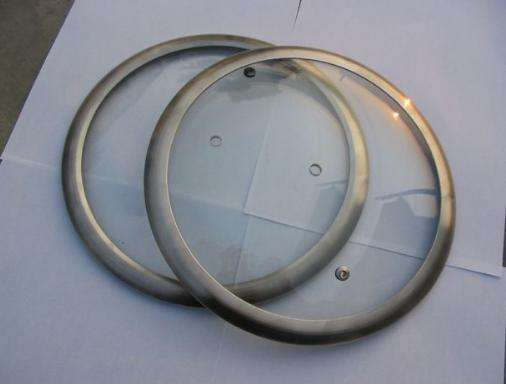
How to choose the Consumer Association's support measures
The labeling of glass products in the market is not clear now, and some operators intentionally confuse concepts, expanding the functions of general tempered glass and even general glass, making it extremely easy for customers to buy and misuse them. The Chinese Customer Association reminds customers to pay more attention.
Heat resistant glass products should have corresponding labels indicating the operating temperature, operating range, etc. Customers should pay attention to the above information when purchasing and using them. Nowadays, borosilicate glass is the majority of heat-resistant glass, while microcrystalline glass has the best heat resistance. Heat resistant glass products are obtained by annealing and cooling, with good thermal stability, high resistance to sudden temperature changes, high production difficulty, and high manufacturing costs. If customers find that the nominal heat-resistant glass is a product with a very low price when making a purchase, they should consider its authenticity.
In addition, glass cookware (tableware) production and operation enterprises also have the responsibility to make clear instructions on product materials, usage environment, and safety precautions. It is also necessary for the production and operation enterprises of corresponding household appliances such as ovens and microwaves to indicate detailed functional requirements and application scope of the supporting heating containers in the user manual. Catering enterprises should also provide customers with glassware that meets safety requirements.
Article source: Tempered glass coverwww.yinghuade.com
-
12-03
Tempered Glass Cover: How to Clean Glass Pot Cover
1. Flour has a strong adsorption effect and can absorb and remove oil stains from the pot lid. The specific steps are to evenly apply flour to the surface of the pot lid, and the amount of flour used
-
12-03
Glass cap manufacturer: Reasons and solutions for foaming of glass bottles after high-temperature spray painting
The primary reason for the foaming of glass bottles during high-temperature spray painting is:1. The coating comes into contact with water or is exposed to high temperatures;2. The solvent evaporates
-
12-02
Silicone pot cover: What is the difference between acrylic panel and glass panel
Distinguishing by chemical properties:Acrylic panels are classified as organic glass panels, which are synthetic plastic panels; Glass panels are classified as inorganic panels.From the perspective of
-
12-01
Market demand for tempered glass covers
The market demand for glass covers will increaseThe material conditions of modern society have been greatly satisfied, and the production of more and more materials and products has reached market sat
Copyright © 2026 Jiangmen Yinghua Technology Industrial Co., Ltd All rights reserved