
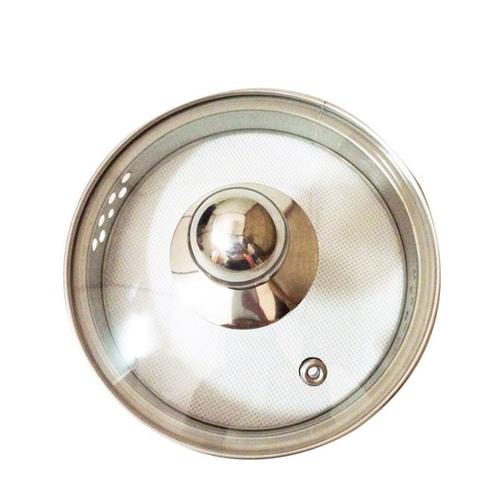
The production method of tempered glass cover
Tempered glass, also known as strengthened glass, is formed by physical or chemical methods to create a compressive stress layer on the surface of the glass. The glass itself has high compressive strength and will not cause damage. When the glass is subjected to external forces, this pressure layer can offset some of the tensile stress, avoiding the breakage of the glass. Although tempered glass is under high tensile stress, there are no defects inside the glass, and it will not cause damage, thus achieving the intention of improving the strength of the glass.
Tempered glass is a secondary processed product of flat glass, and the processing of tempered glass can be divided into physical tempering method and chemical tempering method.
Physical tempered glass is also known as quenched tempered glass. When ordinary flat glass is heated to a temperature close to the softening temperature of glass (600 ℃) in a heating furnace, internal stress is eliminated through its own deformation, and then the glass is removed from the heating furnace. Then, high-pressure cold air is blown towards both sides of the glass using a multi head nozzle to quickly and uniformly cool it to room temperature, thus producing tempered glass. This type of glass is subjected to internal tension and external compression stress. Once local damage occurs, stress release occurs, and the glass is broken into countless small pieces. These small fragments have no sharp edges and are not easy to injure people.
Chemical tempered glass is made by changing the chemical composition of the glass surface to improve its strength, usually using ion exchange method for tempering. The method is to immerse silicate glass containing alkali metal ions into molten lithium (Li ) salt, allowing the Na or K ions on the surface of the glass to exchange with Li ions, forming a Li ion exchange layer on the surface. Due to the smaller expansion coefficient of Li compared to Na and K ions, the outer layer is shortened less and the inner layer is shortened more during the cooling process. When cooled to room temperature, the glass is also in a state of inner layer tension and outer layer compression, similar to the effect of physically tempered glass.
Tempered glass has high strength, with a compressive strength of over 125MPa, which is 4-5 times greater than ordinary glass; The impact resistance is also very high. When measured by the steel ball method, a 0.8kg steel ball falls from a height of 1.2m, and the glass can remain intact. The elasticity of tempered glass is much greater than that of ordinary glass. A piece of 1200mm × 350mm × 6mm tempered glass can undergo a bending deflection of up to 100mm under force. When the external force is removed, it can still return to its original state, while ordinary glass can only undergo a few millimeters of bending deformation.
Another characteristic of tempered glass is its good thermal stability, which makes it less prone to cracking when subjected to rapid cooling and heating. This is because the compressive stress of tempered glass can offset some of the tensile stress caused by rapid cooling and heating. Tempered glass is heat-resistant and shock resistant, with a maximum safe working temperature of 288 ℃, and can withstand a temperature difference of 204 ℃.
Due to its good mechanical properties and thermal stability, tempered glass has been widely used in construction engineering, transportation, and other fields. Flat tempered glass is commonly used for doors, windows, partitions, curtain walls, display windows, furniture, etc. in buildings, while curved glass is commonly used in automobiles, trains, airplanes, and other fields. When using, it should be noted that tempered glass cannot be cut or ground, and the edges and corners cannot be bumped or squeezed. It needs to be selected according to the existing scale specifications or specific design drawings for processing and customization. The glass used for large-area glass curtain walls needs to be tempered, and semi tempered glass should be selected to avoid excessive stress and prevent self explosion caused by wind loads. According to the different glass raw materials used, ordinary tempered glass, heat absorbing tempered glass, colored tempered glass, tempered insulating glass, etc. can be made.
Article source: Tempered glass coverwww.yinghuade.com
-
12-03
Tempered Glass Cover: How to Clean Glass Pot Cover
1. Flour has a strong adsorption effect and can absorb and remove oil stains from the pot lid. The specific steps are to evenly apply flour to the surface of the pot lid, and the amount of flour used
-
12-03
Glass cap manufacturer: Reasons and solutions for foaming of glass bottles after high-temperature spray painting
The primary reason for the foaming of glass bottles during high-temperature spray painting is:1. The coating comes into contact with water or is exposed to high temperatures;2. The solvent evaporates
-
12-02
Silicone pot cover: What is the difference between acrylic panel and glass panel
Distinguishing by chemical properties:Acrylic panels are classified as organic glass panels, which are synthetic plastic panels; Glass panels are classified as inorganic panels.From the perspective of
-
12-01
Market demand for tempered glass covers
The market demand for glass covers will increaseThe material conditions of modern society have been greatly satisfied, and the production of more and more materials and products has reached market sat
Copyright © 2026 Jiangmen Yinghua Technology Industrial Co., Ltd All rights reserved