
Testing method for tempered glass cover
1. Standard inspection: Use a ruler or tape measure with a minimum scale of 1mm to measure the diameter, length, width, and thickness of the glass. When it comes to high precision, a micrometer or an equivalent precision tool can be used for measurement, accurate to two decimal places in millimeters (mm).
2. Impact resistance function inspection: including wind pressure resistance function inspection and heavy object falling ball resistance function inspection.
3. Bending inspection: Place the heat-resistant reinforced glass vertically on a tree, and measure it by placing a ruler horizontally and pressing it tightly against the surface of the glass. When arched, it is indicated as the percentage of the ratio of the height of the arc to the length of the string. When using waveforms, indicate the percentage of the ratio of the height from valley to peak to the interval from peak to peak (or valley to valley).
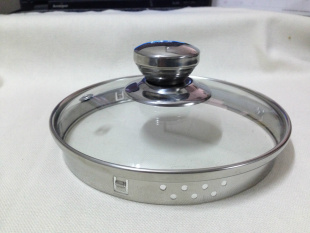
4. Fragmentation inspection: Place the high-temperature resistant strengthened glass sample on another sample of the same shape and standard, bond it between the two samples with photosensitive paper, and use transparent adhesive tape to stick it firmly along the periphery. Use a small hammer or punch with a tip curvature radius of 0.2mm ± 0.05mm to impact the specimen at a position approximately 20mm around the circumference on the longest edge of the base line, causing the specimen to break.
5. Appearance inspection: Inspect the product with the naked eye under good natural or scattered light conditions.
Nowadays, reinforced glass not only integrates into our daily lives, but also adds a color to our homes. The emergence of reinforced glass has deeply driven the development of the glass industry. After many households have such homes, they can be safer and more reassuring.
Article source: Tempered glass coverwww.yinghuade.com
-
12-03
Tempered Glass Cover: How to Clean Glass Pot Cover
1. Flour has a strong adsorption effect and can absorb and remove oil stains from the pot lid. The specific steps are to evenly apply flour to the surface of the pot lid, and the amount of flour used
-
12-03
Glass cap manufacturer: Reasons and solutions for foaming of glass bottles after high-temperature spray painting
The primary reason for the foaming of glass bottles during high-temperature spray painting is:1. The coating comes into contact with water or is exposed to high temperatures;2. The solvent evaporates
-
12-02
Silicone pot cover: What is the difference between acrylic panel and glass panel
Distinguishing by chemical properties:Acrylic panels are classified as organic glass panels, which are synthetic plastic panels; Glass panels are classified as inorganic panels.From the perspective of
-
12-01
Market demand for tempered glass covers
The market demand for glass covers will increaseThe material conditions of modern society have been greatly satisfied, and the production of more and more materials and products has reached market sat
Copyright © 2026 Jiangmen Yinghua Technology Industrial Co., Ltd All rights reserved