
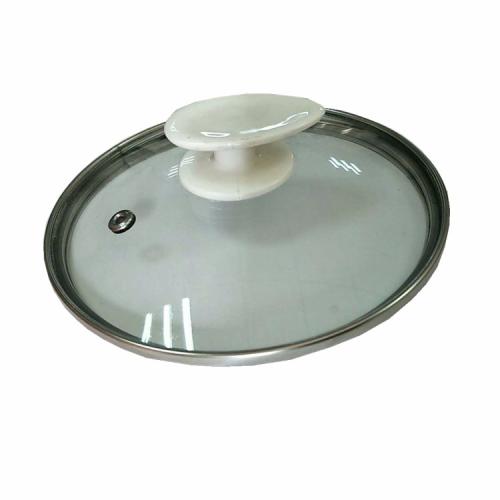
How to make tempered glass cover
Nowadays, glass is increasingly favored by more and more customers. There are not only artistic glass with strong decoration effects such as frosted glass, hot-melt glass, and painted glass, but also various functional glass such as soundproof and noise reducing laminated glass, insulating glass, and heat-insulating and flame-retardant fire-resistant glass. Today, let's introduce how tempered glass is made?
Tempered glass is heated to a temperature close to softening, in a state of viscous activity. This temperature scale is called the tempering temperature scale (620 ℃ -640 ℃), which is formed by holding for a certain period of time and then rapidly cooling.
a. Initial heating stage:
The glass sheet enters the tempering furnace for heating at room temperature. As glass is a poor conductor of heat, the inner layer temperature is low while the outer layer temperature is high. The outer layer begins to expand, while the inner layer does not. Therefore, the expansion of the outer layer is temporarily suppressed by the inner layer, resulting in a tensile stress in the outer layer. Due to the high compressive shrinkage of glass, even with rapid heating, the glass sheet does not break.
Note: From here, it can be understood that once the glass enters the furnace, there is a temperature difference between the inner and outer layers of the glass, which creates stress on the inner and outer layers of the glass. Therefore, thick glass should be heated slower and at a lower temperature, otherwise the glass will break inside the furnace due to the large temperature difference between the inside and outside
b. Continuous heating stage:
When the glass is continuously heated and the temperature difference between the inner and outer layers of the glass is reduced, the stress inside the glass plate is equal when both the inner and outer layers reach the tempering temperature
c. Start of rapid cooling phase (1.5-2 seconds before the start of blowing)
The glass sheet enters the wind grille from the tempering furnace for blowing, and the temperature of the outer layer drops below the center temperature. The outer layer begins to shorten, while the center layer does not. Therefore, the shortening of the outer layer is suppressed by the center layer, causing temporary tensile stress on the outer layer and compressive stress on the center layer
d. Continuous rapid cooling phase:
The inner and outer layers of the glass are further quenched, and the outer layer of the glass has hardened (the temperature has dropped below 500 ℃), stopping shortening. At this point, the inner layer also begins to cool and shorten, and the hardened outer layer suppresses the shortening of the inner layer, resulting in compressive stress on the outer layer and tensile stress on the inner layer
e. Continuous rapid cooling (within 12 seconds)
The temperature of both the inner and outer layers of the glass has further decreased, and the inner layer of glass has dropped to around 500 ℃ at this moment, shortening and accelerating. At this stage, the compressive stress of the outer layer and the tensile stress of the inner layer have been fundamentally formed, but the central layer is still relatively soft and has not completely detached from the viscous activity state, so it is not yet a complete stress state
f. Tempering completed (within 20 seconds)
At this stage, both the inner and outer glass layers are thoroughly tempered, and the temperature difference between the inner and outer layers is reduced. The stress of the tempered glass is formed, that is, the outer surface is compressive stress and the inner layer is tensile stress.
Article source: Tempered glass coverwww.yinghuade.com
-
12-03
Tempered Glass Cover: How to Clean Glass Pot Cover
1. Flour has a strong adsorption effect and can absorb and remove oil stains from the pot lid. The specific steps are to evenly apply flour to the surface of the pot lid, and the amount of flour used
-
12-03
Glass cap manufacturer: Reasons and solutions for foaming of glass bottles after high-temperature spray painting
The primary reason for the foaming of glass bottles during high-temperature spray painting is:1. The coating comes into contact with water or is exposed to high temperatures;2. The solvent evaporates
-
12-02
Silicone pot cover: What is the difference between acrylic panel and glass panel
Distinguishing by chemical properties:Acrylic panels are classified as organic glass panels, which are synthetic plastic panels; Glass panels are classified as inorganic panels.From the perspective of
-
12-01
Market demand for tempered glass covers
The market demand for glass covers will increaseThe material conditions of modern society have been greatly satisfied, and the production of more and more materials and products has reached market sat
Copyright © 2026 Jiangmen Yinghua Technology Industrial Co., Ltd All rights reserved