
How to identify tempered glass covers
Before observation, it is necessary to understand the manufacturing process of tempered glass. Tempered glass is obtained by heating annealed glass to a temperature close to its softening point and then rapidly cooling it. After tempering treatment, the functionality of the glass will be greatly improved, including tensile and impact resistance. The compressive stress on the surface and tensile stress inside tempered glass are important indicators for identifying tempered glass.
The first thing to check is the workmanship of the glass, whether the edges are lubricated and flat; Whether the thickness meets the requirements; Whether the picture is intact, etc. After a rough understanding of lubrication and flow, one will have a general understanding of product quality.
Secondly, the flatness should be observed, and the interior of the tempered glass should be carefully inspected for significant quality defects such as bubbles, debris, fog spots, scratches, etc. If there are significant defects, it will affect the quality of the tempered glass because during transportation, it may reduce the transparency of the glass and increase its instability.
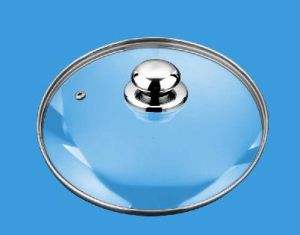
In addition, due to the special processing technology of tempered glass, pressure lines may be formed inside the glass. Therefore, using a polarizing mirror (usually found in glasses or camera lenses) to observe the edges and interior of the glass may result in colored stripes and black and white mottled patterns. By carefully observing the rotating glass, different shapes will appear.
The editor reminds you that when choosing to purchase tempered glass, you must choose a brand with guaranteed quality, because inferior tempered glass may not have the functions that tempered glass should have. Once encountering certain situations, it may pose a certain safety threat to users. Therefore, when purchasing, be sure to pay attention to quality assurance.
Article source: Tempered glass coverwww.yinghuade.com
-
12-03
Tempered Glass Cover: How to Clean Glass Pot Cover
1. Flour has a strong adsorption effect and can absorb and remove oil stains from the pot lid. The specific steps are to evenly apply flour to the surface of the pot lid, and the amount of flour used
-
12-03
Glass cap manufacturer: Reasons and solutions for foaming of glass bottles after high-temperature spray painting
The primary reason for the foaming of glass bottles during high-temperature spray painting is:1. The coating comes into contact with water or is exposed to high temperatures;2. The solvent evaporates
-
12-02
Silicone pot cover: What is the difference between acrylic panel and glass panel
Distinguishing by chemical properties:Acrylic panels are classified as organic glass panels, which are synthetic plastic panels; Glass panels are classified as inorganic panels.From the perspective of
-
12-01
Market demand for tempered glass covers
The market demand for glass covers will increaseThe material conditions of modern society have been greatly satisfied, and the production of more and more materials and products has reached market sat
Copyright © 2026 Jiangmen Yinghua Technology Industrial Co., Ltd All rights reserved